

Conservation Practices
At Ledgenear Farm we practice conservation built on data, not guesswork. Regular soil and manure testing, rotational grazing, and returnable maple syrup bottles all reflect our commitment to productive pastures, clean water, and less waste.
Manure Management
Manure from our herds is dry stored and returned to our fields on a schedule tied to what the soil needs. That benefits the land through higher nutrient retention and reducing the risk of polluted runoff entering our waterways. This management practice also helps reduce our fuel use by lowering both volume and transport weight.
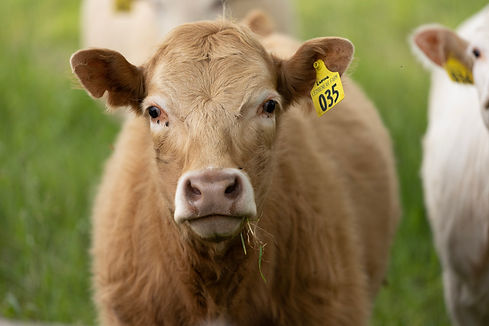
Our beef herd moves to a fresh paddock on a regular rotation, giving each pasture weeks to rest and rebuild before cattle return to it. Resting the land this way keeps our pastures productive year after year, holds up better through a dry summer, and keeps our cattle fenced away from streams and waterways.


Nutrient Management
We follow a nutrient management plan developed with the University of Vermont and Orleans County Natural Resources Conservation District, testing our soil and manure regularly so that we know exactly what our fields need and don't apply more than that. It's a system built on data, not guesswork, and it keeps our pastures productive while protecting the water around us.
Sustainable Packaging
Our maple syrup goes out in glass bottles protected by recyclable paper packaging. Every bottle ships with a prepaid return label so that the bottle can come back to us to be cleaned and reused. It's a small step, but it's one we've built into how we do business.

Ledgenear Farm participates in the “Marketing Conservation Program," led by the Orleans County Natural Resources Conservation District and funded by the Agricultural Clean Water Initiative Program. The Marketing Conservation Program bridges agricultural stewardship and public awareness. By highlighting the daily conservation efforts of local farms, this initiative demonstrates how farm management practices protect water quality and farm viability. Learn more.